

Most pour-day problems are not concrete problems. They are site problems: a form that shifts under load, a subgrade that was never compacted, a gate that is two feet too narrow for the truck. By the time the mixing unit is on site, none of these can be fixed quickly, and every minute spent fixing them is a minute the crew is not placing and finishing. Volumetric concrete gives you control over the mix and the volume, but that control only pays off when the site is ready to receive it.
November adds another layer. Ontario ground can freeze overnight and thaw by noon, snow and ice collect in forms, and a site that looked ready on Friday can look very different on Monday morning. This guide walks through the preparation steps in the order they should happen.
In this article:
- Confirm the Layout and Grades First
- Prepare and Compact the Subgrade and Base
- Build Forms That Will Hold
- Place Reinforcement and Vapour Barriers Before Delivery Day
- Clear a Real Path for the Truck
- Stage the Crew, Tools, and Curing Materials
- Add a Cold-Weather Check in November
- Plan for Cleanup Before the Truck Arrives
Confirm the Layout and Grades First
Preparation starts with the finished surface, not the concrete. Decide where the slab edges, steps, and joints will sit, and confirm the slope that will carry water away from buildings and toward drainage. Fixing a drainage problem after the pour means cutting or replacing the slab, so it is worth walking the layout with string lines or stakes before any digging is final.
Once the layout is set, measure again. Volume estimates depend on final depths, and a subgrade that ends up a few centimetres lower than planned adds more concrete than the original quote assumed. Our team can confirm quantities against the final site conditions, so share updated measurements before delivery rather than after.
Prepare and Compact the Subgrade and Base
Concrete is only as stable as what sits beneath it. Soft spots, buried organic material, and uneven fill all lead to settlement and cracking later, and none of it shows until the slab is already cured.
- Remove topsoil, roots, and organic material from the full footprint
- Fill low areas with suitable granular material in layers, not one thick lift
- Compact each layer so the base is firm and uniform across the entire pour
- Check the finished base depth against the design thickness before forms go in
- Fix any pooling or drainage issues in the base now, while it is still easy
A uniform base also helps the mix behave consistently. Dry, absorbent base material pulls water out of fresh concrete from below, which is worth discussing during the ordering conversation so the mix and any surface protection can be planned accordingly.
Build Forms That Will Hold
Forms carry the full weight and pressure of wet concrete, and a form that moves during placement creates a slab that is out of shape for good. Stakes should be driven firmly and spaced so that boards cannot bow outward, and corners and joints should be braced rather than simply butted together.
Check form height against the finished surface level, not the ground around it. Clean the inside faces of the forms, and apply a release agent where the forms will be removed after curing. For curved edges, use flexible forming material that holds its radius under pressure instead of improvised bends that spring back.
Place Reinforcement and Vapour Barriers Before Delivery Day
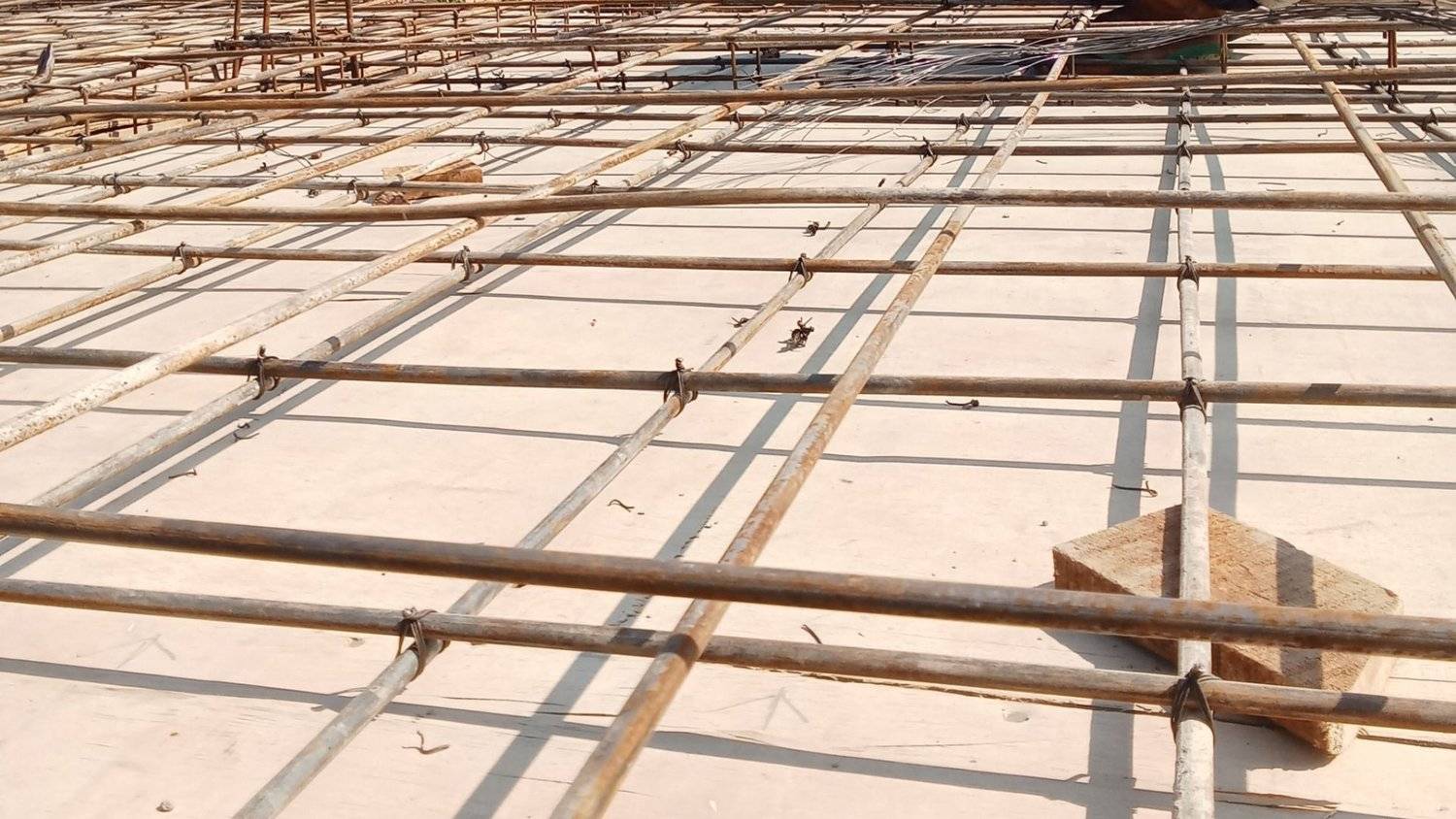
Reinforcement should be in place, supported on chairs or blocks, and tied before the truck arrives. Rebar or mesh resting on the base instead of sitting at the specified height does very little for the slab, and pushing it into wet concrete during placement slows the whole pour down.
Where a vapour barrier or insulation is part of the design, install it first and check the seams. If the project calls for fibre reinforcement as part of the mix, raise that at the time of order. It is added during on-site production rather than placed by hand, but it needs to be planned for.
Clear a Real Path for the Truck
This is where the October ordering guide and this one overlap, so here is the preparation side. A loaded mixing truck is heavy, and a path that looks fine for a pickup can rut, sink, or damage a finished lawn, driveway, or interlock under that weight.
- Walk the route from the road to the pour location and look up as well as ahead
- Trim branches and move anything that sits within the truck’s reach
- Check gates, fences, and tight turns, and remove or open what you can
- Protect finished surfaces such as interlock, paving stones, or lawn along the route
- Keep the delivery area free of parked vehicles, materials, and equipment
- Confirm where the truck will stand during production and placement
If a route cannot be cleared, tell us before delivery day. Placement distance and method can often be planned around a tight site, but only when we know about it in advance.
Stage the Crew, Tools, and Curing Materials
Volumetric production runs when your crew is ready, which is an advantage only if the crew actually is ready. Before the truck arrives, confirm that everyone knows their role, finishing tools are on site and in working order, and curing materials are staged within reach.
Decide in advance who will direct the truck operator, who will place, and who will screed and finish. On larger pours, a short walkthrough of the sequence before the first load of material is mixed prevents confusion once concrete is moving. As the team at CeMix sees on sites across the GTA and Golden Horseshoe, the smoothest pours are rarely the simplest ones. They are the ones where the crew had a plan and the site matched it.
Add a Cold-Weather Check in November
Cold-weather preparation is its own step, and it starts with the ground. Concrete should never be placed on frozen subgrade, because the ground thaws unevenly and the slab settles with it. If frost has formed overnight, the base needs to be thawed and re-checked before placement, not just brushed off.
- Remove snow, ice, and standing water from forms and base before the pour
- Check the forecast for the pour day and the following two or three nights
- Plan insulating blankets or other protection and have them on site before the truck
- Discuss mix adjustments, such as accelerators, when you request your estimate
- Schedule the pour early in the day to use the warmest part of the window
Because volumetric concrete is produced on site, mix adjustments for cold conditions can be made close to placement rather than locked in hours earlier. Our concrete basics resource explains the fundamentals of hydration and curing, which is useful background for deciding how much protection a late-season pour needs.
Plan for Cleanup Before the Truck Arrives
Cleanup is part of the preparation. Decide where wash water and any leftover material can go without affecting drainage, neighbouring properties, or finished surfaces, and ask about cleanup requirements when you book. Having a plan for this on the day keeps the crew focused on finishing instead of improvising at the end of a long pour.
Volumetric supply also means only the volume needed is produced, so the amount of leftover material is typically small compared to an over-ordered ready-mix load. Our volumetric concrete page explains how the process works if you want the full picture before your first pour.
Ready to Book Your Delivery?
A well-prepared site is the difference between a pour that runs on schedule and one that stalls on avoidable problems. If you are planning a project anywhere across the GTA, Golden Horseshoe, or surrounding regions, contact CeMix to request a free estimate and talk through your site details before delivery day. Our team is available 24/7 to help.
