

A finishing crew shows up at 11am on a July pour, humidity is low, a dry wind is blowing off an open lot, and the slab that was perfectly workable twenty minutes ago is already starting to crust at the edges. Nobody changed the mix. The weather changed the mix. That gap between what the concrete was designed to do and what it actually does once it hits a hot, dry, windy Ontario job site is where most summer cracking, crazing, and weak surfaces come from, and it is almost always preventable with the right protection steps taken before the problem shows up.
- The Real Danger Isn’t the Air Temperature, It’s the Evaporation Rate
- Protecting the Slab Before the Truck Ever Arrives
- Slowing Moisture Loss While the Crew Is Finishing
- Matching the Curing Method to the Conditions
- The Warning Signs That Mean You Need Extra Protection
- Why On-Site Mix Control Changes How You Fight the Heat
- A Quick-Reference Protection Checklist for Summer Pours
- Plan Your Next Hot-Weather Pour With Confidence
The Real Danger Isn’t the Air Temperature, It’s the Evaporation Rate
Most crews watch the thermometer and assume a cooler morning means a safer pour. That assumption misses the actual mechanism doing the damage. Plastic shrinkage cracking happens when water is leaving the surface of the concrete faster than bleed water can rise up to replace it. That imbalance is driven by four things acting together: concrete temperature, air temperature, relative humidity, and wind speed across the surface. A mild, breezy, low-humidity day can strip moisture from a slab faster than a hotter, still, humid one.
This is exactly why we point contractors toward our own evaporation rate calculator before a summer pour rather than a weather app. Punch in the four variables and you get a real evaporation estimate instead of a guess based on how hot it feels standing in the parking lot. When that number climbs into the range where cracking risk rises sharply, that is the signal to activate the protective measures below, not the temperature alone.
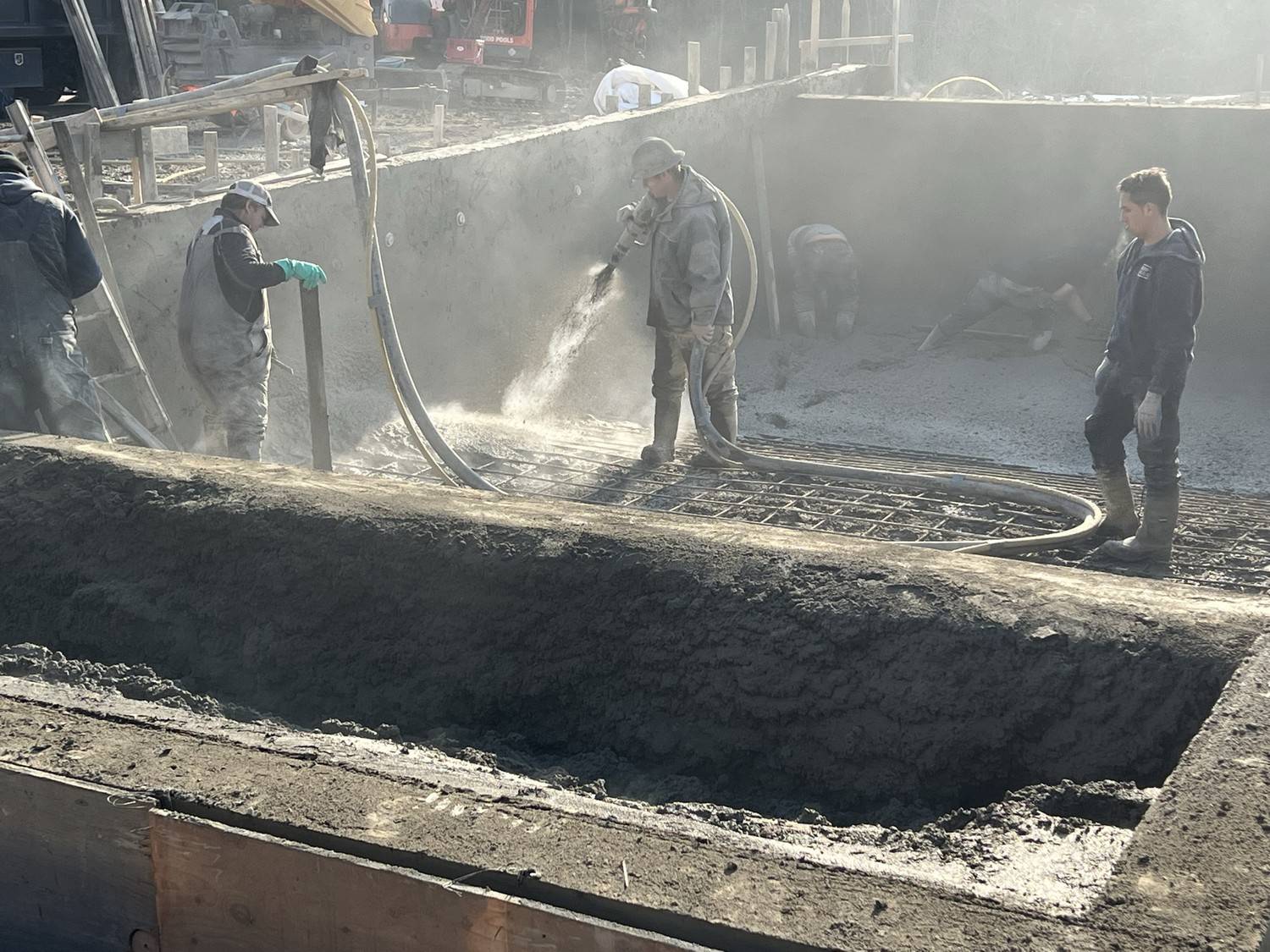
Protecting the Slab Before the Truck Ever Arrives
Protection starts long before finishing tools ever touch the surface. Once concrete is on the ground, you are managing damage. Before it arrives, you are preventing it.
- Soak the subgrade and forms the night before or early that morning so dry, thirsty ground does not pull moisture out of the fresh concrete from underneath.
- Position windbreaks or temporary screening on the side of the site facing prevailing wind, especially on open lots with nothing to block air movement across the pour.
- Set up shade structures or schedule the pour to track the sun’s path so freshly placed concrete is not sitting under direct exposure during its most vulnerable early hours.
- Chill mixing water or store aggregates out of direct sun where practical, since concrete temperature itself is one of the four variables driving evaporation.
- Stage curing materials, sprayers, and covers at the site and ready to use before the first load lands, not after someone notices the surface is drying out.
Slowing Moisture Loss While the Crew Is Finishing
The window between placement and final finishing is when concrete is most exposed and least protected. A few field techniques make a real difference here.
Fogging the surface with a fine mist raises humidity in the air directly above the slab without adding water to the concrete itself, which helps close the gap between evaporation and bleeding. Evaporation retardant sprays form a temporary film that slows moisture loss during the finishing window and then dissipates, which is different from a curing compound and should never be confused with one. Sunshades or temporary tenting over the active work area buy finishing crews time on the hottest, brightest stretches of the day. None of these techniques replace curing. They exist to protect the surface during the gap before curing can actually begin.
Matching the Curing Method to the Conditions
Curing is not optional in summer, it is the single most important step for making sure the concrete actually reaches the strength and durability it was designed for. Hydration needs water, and if the surface dries before hydration is finished, you are left with a slab that looks fine but never developed properly underneath.
Different curing methods suit different summer scenarios:
- Wet curing with burlap or cotton mats keeps the surface continuously moist and works well on smaller residential slabs, walkways, and patios where crews can monitor and re-wet coverings through the day.
- Curing compounds seal moisture in with a sprayed film and are practical for larger commercial or industrial pours where continuous wetting is not realistic.
- Plastic sheeting traps moisture underneath but needs to be weighted down properly on windy sites, or it becomes another source of uneven curing and discoloration.
- Curing blankets add an insulating layer that can help on pours where temperature swings between a hot day and a cooler evening are a concern.
Whichever method fits the project, the timing matters as much as the method. Curing that starts too late does not undo moisture already lost.
The Warning Signs That Mean You Need Extra Protection
Here is the counterintuitive part most crews get wrong. They treat 30 degree afternoons as the danger zone and relax on milder days. In practice, a cooler day with strong sun, low humidity, and a steady breeze can produce a higher evaporation rate than a hotter, still, humid one. Watch for the combination, not any single reading.
Signs that conditions have crossed into higher-risk territory include a surface that looks dry or dull within minutes of finishing, a noticeable temperature difference between the concrete and the surrounding air, visible dust or debris moving steadily across the site from wind, and a forecast humidity reading that keeps dropping through the morning. When two or more of these show up together, it is worth pausing to re-check the evaporation math rather than pushing ahead on schedule.
Why On-Site Mix Control Changes How You Fight the Heat
Protection strategies work best when the concrete itself is not already fighting the clock before it is placed. With traditional ready-mix, concrete starts its chemical reaction the moment water and cement meet at the plant, and every extra minute in transit during a July heatwave eats into the working time crews have to finish and start curing.
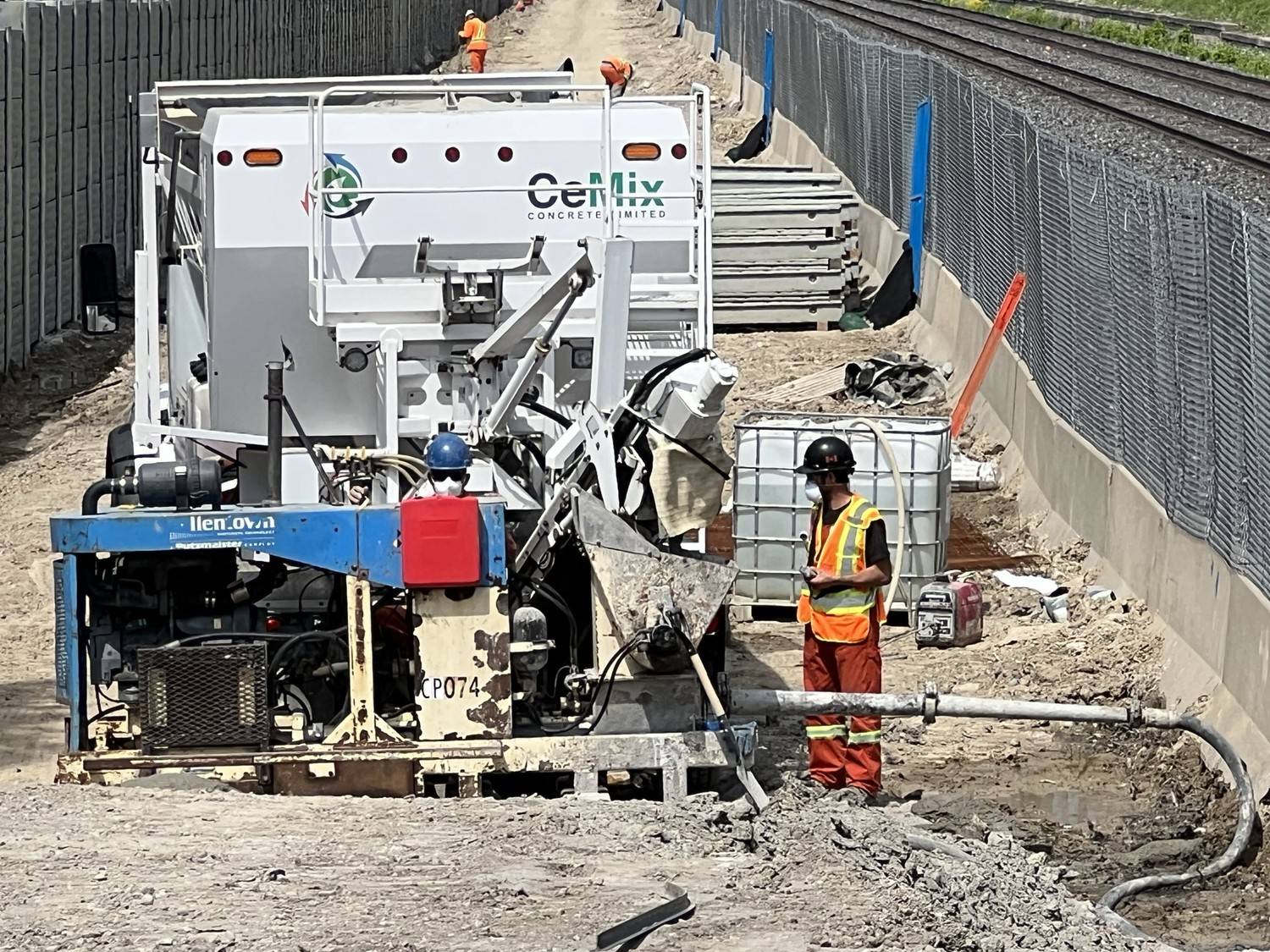
Volumetric concrete supply removes that variable. Because materials stay separate until the mix is produced right at the job site, crews are working with fresh concrete from the moment it hits the ground rather than concrete that already spent time losing slump and working time in a drum on the highway. It also means the mix design, water content, or admixtures like retarders can be adjusted on site to match the exact conditions of that day, instead of being locked in before anyone knew how hot or windy the afternoon would turn. As the team at CeMix sees on job sites across the GTA and Golden Horseshoe every summer, the pours that go smoothly in extreme heat are almost always the ones where the crew had control over both the concrete and the environment, not just one or the other.
Volumetric supply is not a substitute for good protection technique, it just gives crews a better starting point to protect from.
A Quick-Reference Protection Checklist for Summer Pours
Keep this on hand for any pour scheduled during a summer heat advisory or a low-humidity, windy stretch:
- Check the evaporation rate, not just the temperature forecast
- Wet the subgrade and forms ahead of the pour
- Set up windbreaks and shade where the site allows
- Stage fogging equipment or evaporation retardant on site
- Begin curing the moment finishing operations allow, not after a break
- Choose a curing method that matches project size and site conditions
- Recheck conditions mid-pour, since a morning reading can change by afternoon
Plan Your Next Hot-Weather Pour With Confidence
Hot weather does not have to mean compromised concrete. The contractors who consistently avoid summer cracking and surface problems are the ones who plan around evaporation rate, protect the slab before and during placement, and choose curing methods that fit the job rather than defaulting to whatever is fastest. If you want to understand the science behind how concrete behaves in Ontario’s summer conditions in more depth, our concrete basics resource breaks down the fundamentals of hydration, curing, and strength development.
If you have a summer pour coming up anywhere across the GTA, Golden Horseshoe, or surrounding regions and want a mix that can be adjusted on site to match the day’s conditions, CeMix’s team is available around the clock to talk through the project and provide a free estimate.
